- Sunday, 14th December, 2025
By: Dr. Hamza Safavi and Mr. Mohammed Baharoon
The Relationship between Iran and the UAE, since the inception of the later, has been marked by one geopolitical event after the other which made them locked in a cycle of threats and polarization. This has, nonetheless, didn’t stop the UAE from being Iran’s second-largest trading partner after China and biggest non-oil trader partner. The UAE has also never been part of any offensive act against Iran. As the UAE, and the GCC, are starting to shift from geopolitics to geoeconomics as a driver from their foreign policy, new opportunities are starting to unlock in the region. The rapprochement between Iran and Saudi Arabia was an outcome of Saudi vison 2030 which is at heart a geoeconomic not a geopolitical approach. UAE, despite the territorial dispute over the 3 islands continue to be economically connected to Iran even during the Iraq – Iran war because of its economically, not politically driven, approach.
This leaves the question of what type of opportunities lies ahead of Iran if it takes a similar approach? Here are some.
1. Trade and Logistics
Cooperation between Iran and the UAE in trade and logistics could enter a new phase by establishing modern and efficient transportation infrastructure. Leveraging Iran’s strategic ports—such as Shahid Rajaee, Imam Khomeini, and Chabahar—alongside the UAE’s major ports, including Dubai, Jebel Ali, Abu Dhabi’s Khalifa Port and Fujairah, could facilitate the formation of a regional transport network that benefits from the UAE existing global network. This collaboration would not only reduce shipping costs and improve delivery times but could also position Iran as a transit hub for access to Central Asia, the Caucasus, and even Russia. This will open up supply chains for energy, food security, and rare earth minerals as well as help connect the land locked central Asian countries to partners in the GCC and beyond.
This will require establishing new shipping lines, streamlining customs procedures, and integrating information exchange systems. Additionally, the creation of joint free trade zones for the production, packaging, and export of specialized goods could attract mutual investment. These zones could capitalize on Iran’s labor force and production capacity alongside the UAE’s financial and commercial infrastructure to produce high-value-added goods, which could then be distributed through the UAE’s networks to emerging markets in Africa, Southeast Asia, and Europe. Beyond direct economic benefits, such cooperation would strengthen commercial ties and foster long-term trust between the private sectors of both countries.
2. Energy and Environment
Iran-UAE collaboration in energy and environmental sustainability could mark a turning point in regional development. Both countries, with their vast desert landscapes and high solar exposure, possess significant potential for renewable energy production, particularly solar power. Joint projects in this field would not only reduce dependence on fossil fuels but also facilitate knowledge transfer, foreign investment, and the growth of clean industries. But also, their hydrocarbon production, as well as nuclear power plants can power the world’s need for data center especially in the region.
3. Tourism and People Mobility
Tourism is powered by people mobility, not just goods. Flow of people movement will be crucial for movement of talent and skillful work force but also tourism can support the labor-intensive service industry as well as entrepreneurship. The cultural exchange that results from people mobility can serve as a bridge to enhance mutual understanding and people-to-people ties. Iran, with its rich historical, cultural, and eco-tourism attractions, holds great potential for tourism, which can benefit from the UAE status as leading world destination. Dubai alone consistently ranks among the top 5 most visited cities globally, competing with destinations like Paris, London, and Bangkok.
Culturally, joint art festivals, handicraft exhibitions, and film weeks in both countries could foster creative exchange and greater appreciation of shared heritage. In education, partnerships between leading universities, joint degree programs, and faculty/student exchanges could strengthen academic ties, creating long-term opportunities for human and scientific development while reducing cultural gaps. This will create a different area of cooperation across the region and beyond and will support the exchange of trade with exchange of people.
4. Technology and Innovation
Strengthening innovative cooperation between Iran and the UAE could drive a transformative shift in the region’s digital economy. Establishing joint accelerators to support startups in IT, telecommunications, and digital services would enhance both nations’ innovation ecosystems while enabling knowledge-sharing among young entrepreneurs. An Iran that is more connected the world and one that its economy and people are part of the ecosystem of the world is more important to the UAE and the region than one that is isolated and independent from it.
Collaborative projects in fintech and blockchain will be crucial for the flow of goods and will increase transparency thus making Iran more amiable to Direct Foreign Investment. Furthermore, joint research initiatives in advanced fields such as artificial intelligence, machine learning, and data science would integrate academic capacities, creating opportunities for indigenous knowledge production, specialized training, and commercialization of tech-driven products—ultimately bridging the digital divide and placing the region at the heart of the digital transformation.
5. Economic Transformation
Like the rest of the GCC countries, Iran will need to conduct its own economic transformation to allow it to be connected to the global economy and global supply chain once sanctions are lifted. It will require a lot of economic diplomacy between Iran and the UAE particularly with the fast network of countries the UAE have signed CEPA agreements with.
What Can unlock such opportunities?
The proposed areas of cooperation present tangible opportunities for Iran and the UAE to strengthen bilateral ties, foster regional stability, and achieve mutual economic growth represent a major transformation not only for Iran’s economy but for the future of the region. However, like all great projects it will require huge investments economic, political and strategic. Ending Iran’s isolation in the region have started in good faith but it needs to be completed through a nuclear deal that can lift all the sanctions and reinstate the role of Iran as a major contributor to the region’s economy and strategic standing in the world. The fact that there is a US president in the White House that looks at economy first is an opportunity for Iran and the region.
Iran has a huge potential to become an economic powerhouse in the region, but this will require a huge transformation in the way it sees itself, the region around it and the zero-sum calculus that has governed its relationship with its neighbors.
Dr. Hamza Safavi is a Faculty Member of the University of Tehran and CEO of the Future Studies Center of the Islamic World in Iran
Mr. Mohammed Baharoon is the director general of Dubai Public Policy Research Center in the UAE.
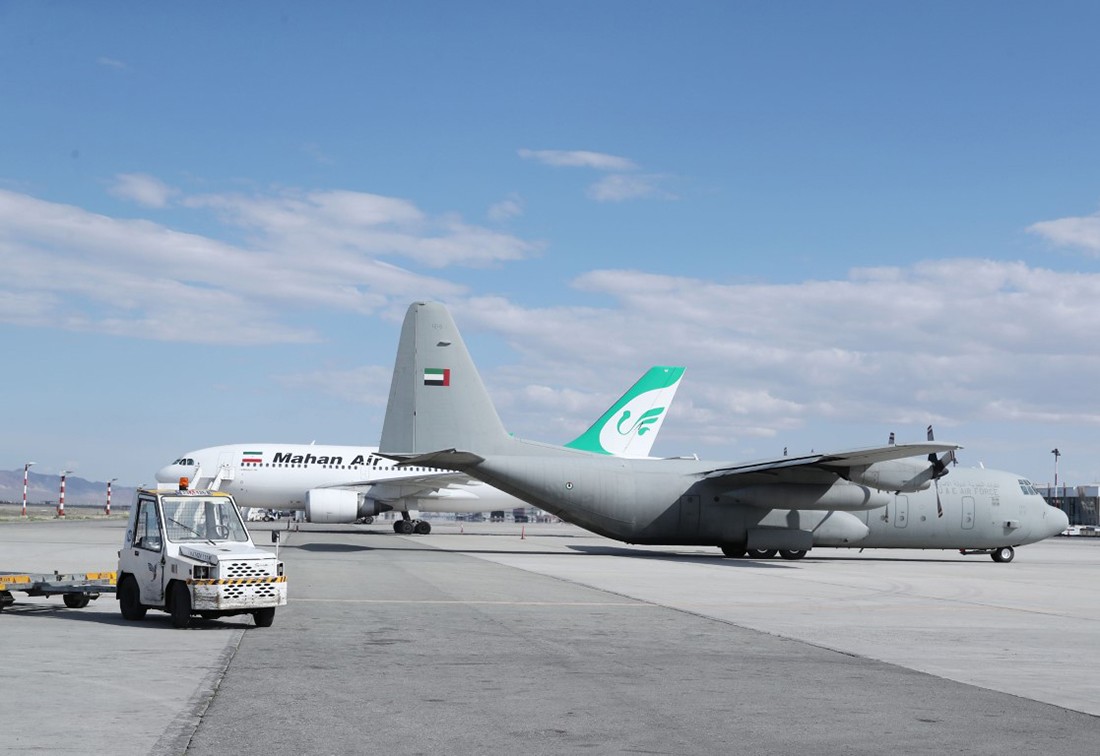
*Image: On 3 March 2020, the UAE, in cooperation with WHO, sent a plane to Iran carrying 7.5 tonnes of medical supplies and five experts to support 15,000 healthcare workers. (Image: WAM)